
"Begin with the end in mind."
Business & Personal Journeys
Building the business around what success means to you
At Kognise, much of our work focuses on the business: its strategy, growth, capital requirements, operating model and the value being created. But the business is only part of the picture.
Behind every privately owned business are people with their own ambitions, responsibilities and ideas about what success actually means. Those two journeys cannot sensibly be considered in isolation. Decisions about growth, funding, ownership, risk and timing affect the people behind the business, while their personal priorities inevitably influence what the right decisions are for the company. Understanding both increases the chances of creating the right outcome, rather than simply building a more valuable business.
What's your number?
Founders and business owners are often asked about their exit strategy. There is another question we think should come much earlier: what's your number? That isn't simply the valuation at which you would sell. It is what the business needs to create for you to be able to say that the journey has achieved what you wanted it to achieve. For one person that might mean financial independence or security for their family. For another it could be the freedom to start another business, pursue something they care deeply about or simply have more control over how they spend their time. The important point is that the answer is personal. Once you understand what success needs to look like for the individual, you can make better decisions about what success needs to look like for the business.
Two journeys. Connected decisions
The Business / Capital Journey™ and the Personal / Family Journey are different journeys, but they continually influence one another. A decision to raise capital can accelerate growth while changing ownership and control. Growing the company can create substantial value while concentrating more of someone's personal wealth in a single asset. Dividends can create personal liquidity while removing capital from the business. Succession, a partial sale or a complete realisation can fundamentally change both the company and the lives of the people behind it.
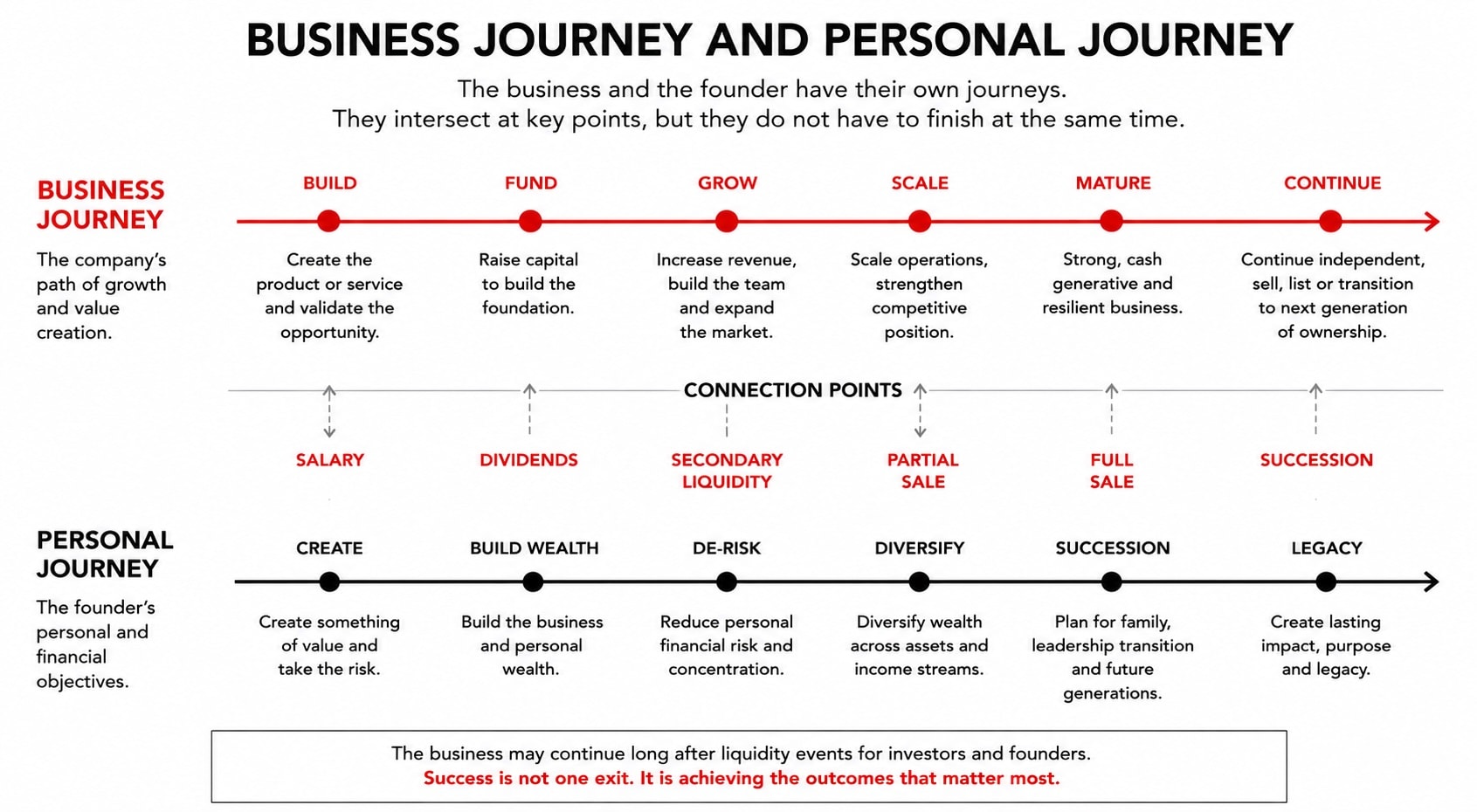
From the beginning, not just the exit
This conversation should not begin when somebody is preparing to sell. For a startup founder, understanding the personal destination can influence decisions about ambition, external investment, dilution and control from the outset. For an established owner, it can influence how value is created, how much wealth remains concentrated in the business and whether the objective is continued ownership, succession, partial realisation or sale. As the business develops, both journeys change. Family circumstances evolve, priorities move, wealth is created and ambitions that seemed important ten years earlier may no longer matter. The destination therefore needs to be revisited rather than assumed.

Separate relationships. Connected thinking
Kognise does not provide personal financial, wealth or family advice. The personal journey is undertaken through a separate and confidential relationship with Family Legacy, our specialist partner in this area. The separation is deliberate. Individuals and families do not need to disclose their private financial circumstances, family discussions or personal priorities to Kognise, while Family Legacy does not become responsible for the strategy, capital or operational work undertaken by Kognise.
Visit Family Legacy →One journey creates value. The other gives it purpose
The role of Kognise is to help create, fund, deliver and ultimately realise sustainable business value. The personal journey asks what that value is ultimately intended to achieve. Connecting the two does not mean combining the advisory relationships. It means making better decisions because each journey can be considered in the context of the other. The objective is not simply to maximise the value of the business, but to ensure that the value being created supports the outcome the people behind it actually want.
What do you want this business journey to make possible?